Сенсация! Под Африкой обнаружен загадочный ритмичный сигнал из недр планеты. Ученые в шоке: этот пульс может однажды РАЗОРВАТЬ континент на части! 🌋 Новое исследование выявило аномалию в литосфере — как будто Земля живая и стучит из глубины. Геологи ломают голову: что вызывает эти толчки? Возможные версии — движение магмы или тектонические сдвиги. Главный вопрос: ждет ли нас новый суперконтинент? Спойлер: процесс займет миллионы лет… но факт пугает и завораживает! Думаете, Земля «дышит»? 🤯 #Наука #Геология
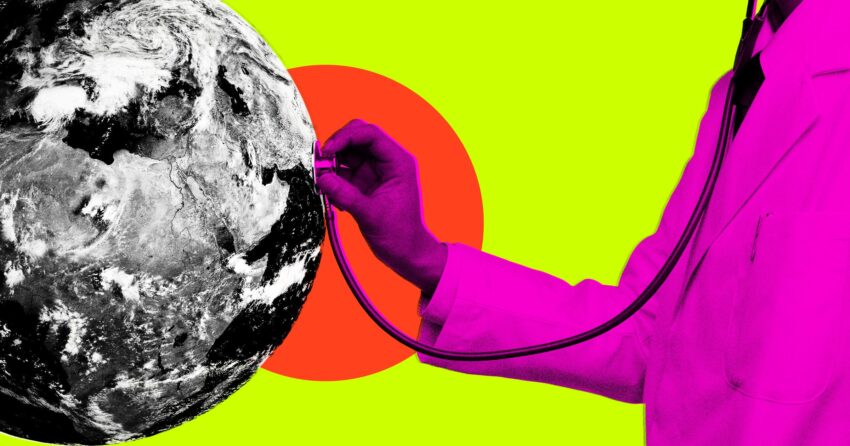
Earth Beats / Earth & Energy Scientists Detect Deep, Rhythmic Pulse Coming From Inside the Earth by Maggie Harrison Dupré Jun 29, 3:00 PM EDT Getty / Futurism «This has profound implications…» DJ Earth Scientists have discovered a heartbeat-like pulse emanating from inside the Earth beneath the continent of Africa, which they believe will one day rip the continent into pieces. In a new study published today in the journal Nature Geoscience , a team of European and African scientists explain how they used chemical signatures to examine this inner-Earth heartbeat, explaining that molten chunks of mantle — the rocky layer found between the Earth’s surface and core — are surging together through rift zones, or weak areas of volcanos where magma is likeliest to break through our planet’s crust. These internal surges have settled into rhythmic bursts of pulsing plumes. Which, while fascinating to imagine, effectively means that bursts of molten rock are pushing against the African continent’s crust — and over millions of years, will likely tear the continent apart, making way for a new ocean basin. Researchers focused on the Afar region of Ethiopia, a volcanic area where multiple rift zones are located, collecting and analyzing around 130 samples of volcanic rock. «We found that the mantle beneath Afar is not uniform or stationary,» said Emma Watts, a Swansea University geologist and lead author of the study, in a statement . «It pulses, and these pulses carry distinct chemical signatures.» Deep Understanding As the Independent notes , the research is significant because while scientists have believed for some time that the region’s mantle was being pushed against its crust and causing it to expand, they didn’t quite know why. This new research offers scientists a deeper understanding of that process. What’s more, it reveals that the Earth’s plates actually have a huge influence on the movements of the molten magma located beneath them. «These pulses appear to behave differently depending on the thickness of the plate, and how fast it’s pulling apart,» said study co-author Tom Gernon, a geologist at the University of Southampton, in a statement. «In faster-spreading rifts like the Red Sea, the pulses travel more efficiently and regularly like a pulse through a narrow artery.» Excitingly, the researchers believe their discovery will pave the way for more breakthroughs in how we understand and study volcanic activity, the dynamic inner workings of our planet, and what activity found today means for Earth’s future. «This has profound implications,» said the University of Southampton’s Derek Keir, an earth sciences professor and study co-author, in a statement, «for how we interpret surface volcanism, earthquake activity, and the process of continental breakup.» More on planet Earth: A Strange Darkness Is Spreading Throughout the Oceans Share This Article
